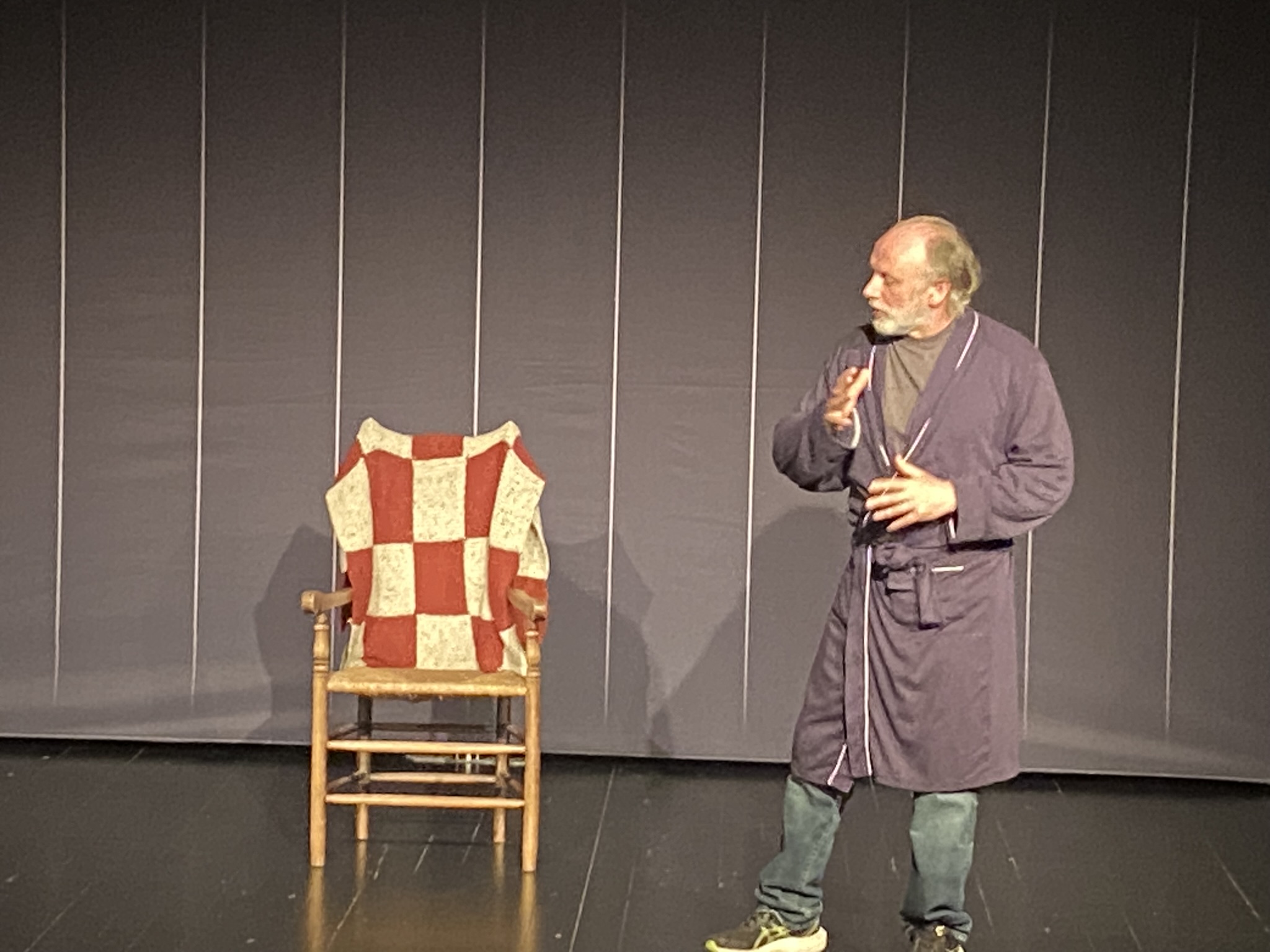
The sheer scale of the deadly injustice being done to the civilian population of Gaza does not compare at all with the story of Paddy Armstrong, which was brought to a Geneva audience in a bravura performance on Saturday night by the Irish actor, Don Wycherley.
The only common thread between the two scenarios is an unadulterated desire by an all-powerful state to take blind vengeance and ignore all legal protections for the innocent.
The comparison comes to mind because Saturday night’s performance of The Life and Times of Paddy Armstrong benefitted the Gaza School of Music, a branch of the Edward Said National Conservatory of Music in Palestine.
In the case of Gaza, genocide has cost the lives of over 70,000 men, women and children. In the case of the Guildford Four, the young lives of Paddy Armstrong, Carol Richardson, Gerry Conlon and Paul Hill were destroyed because of police brutality and forced confessions to an IRA atrocity in 1974.
Presiding over their sham trial, Justice Lord Donaldson, expressed regret that they had not been charged with high treason, which carried a mandatory death penalty.
They were locked up and abused for 15 years in a hostile prison environment even though two years into their sentence, the real perpetrators admitted to the bombing.
Paddy Armstrong’s taste for drugs, his English girlfriend Carol Richardson, and the fact he could not drive, were just some of the reasons that he did not meet the profile of an IRA volunteer on active service in the UK.
The script by Wycherley, Niamh Gleeson and Mary-Elaine Tynan draws heavily from Tynan’s highly acclaimed biography ‘Life After Life’, written with Armstrong’s full cooperation.
Wycherley dramatises the arc of his life, from the mean streets of west Belfast at war, through life in swinging London, his arrest, interrogation, imprisonment and release; all from the disjointed perspective of a man living with early onset dementia, which is the case with Paddy Armstrong.
The whole is told with unsparing detail, full of humour, empathy and pathos. Wycherley plays many parts with aplomb, each scene contributing to the audience’s appreciation of Paddy’s ability to hold on to his own humanity and sense of humour in appalling circumstances until his innocence is finally recognised. While Gerry Conlon and Paul Hill shoot out the front door of the Old Bailey, Paddy hangs back to support Carol Richardson who prefers to leave through the back door – a moment that is captured with all its poignancy.
It’s a story of redemption, bringing us finally to Clontarf, on the shores of Dublin Bay, where Paddy finds contentment with his wife Caroline and their two children.
Following a standing ovation, Wycherley joined Tynan for a post-show audience Q&A. They were both at pains to emphasise that it is not an anti-English story but rather a story that could feature in any Amnesty International Report from far too many countries around the world.
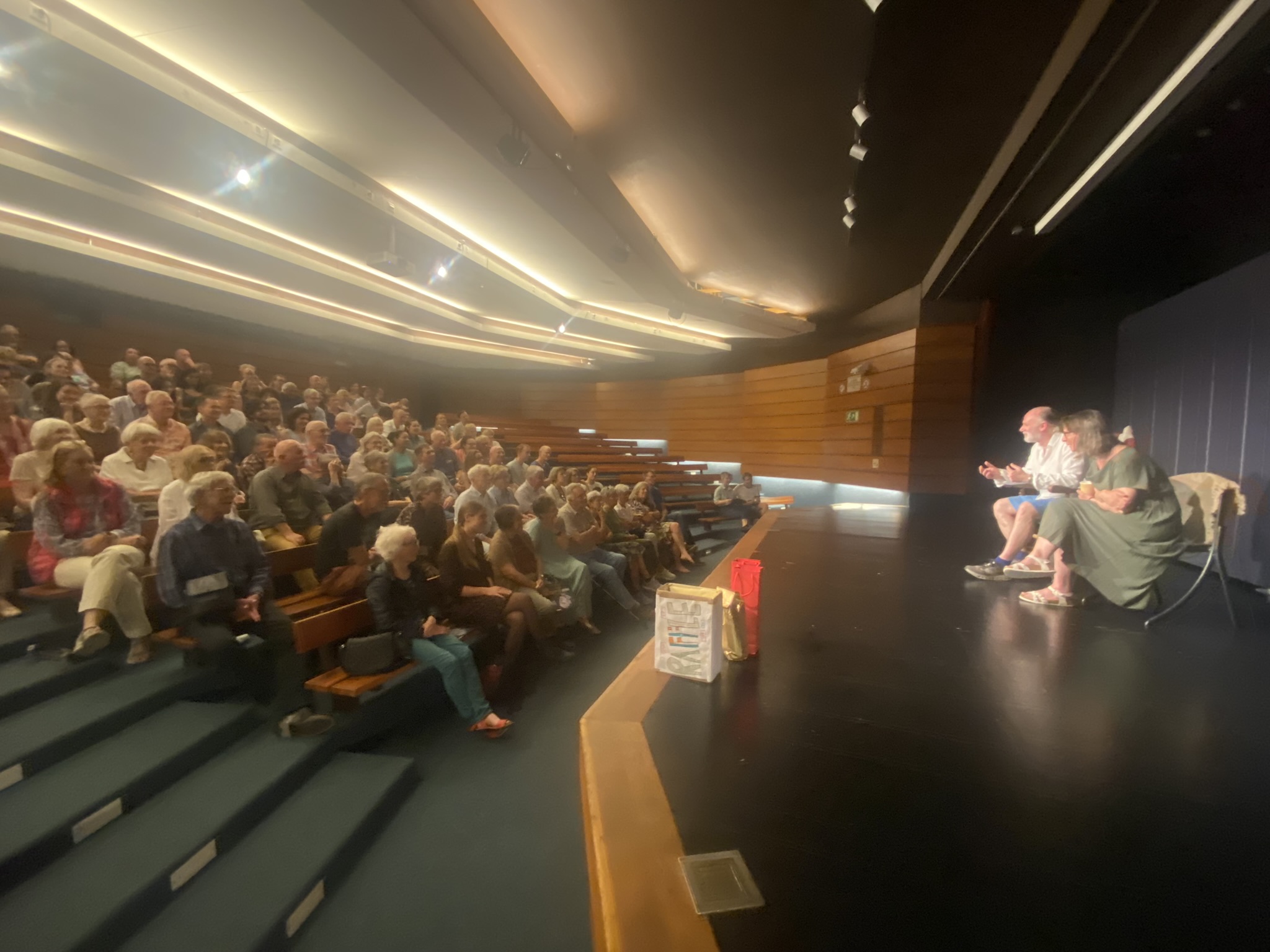
Despite the long, hot weekend, which triggered an exodus from Geneva, there was a hugely appreciative audience who gave the show a standing ovation and raised CHF 4,000 for the Gaza School of Music. The following day GLAS received an email from one audience member who wishes to make a further donation of US$ 5,000. So it’s a good outcome for the many hundreds of traumatised and displaced children who benefit from the outreach provided by the school staff and volunteers in shelters, camps and bombed out buildings.