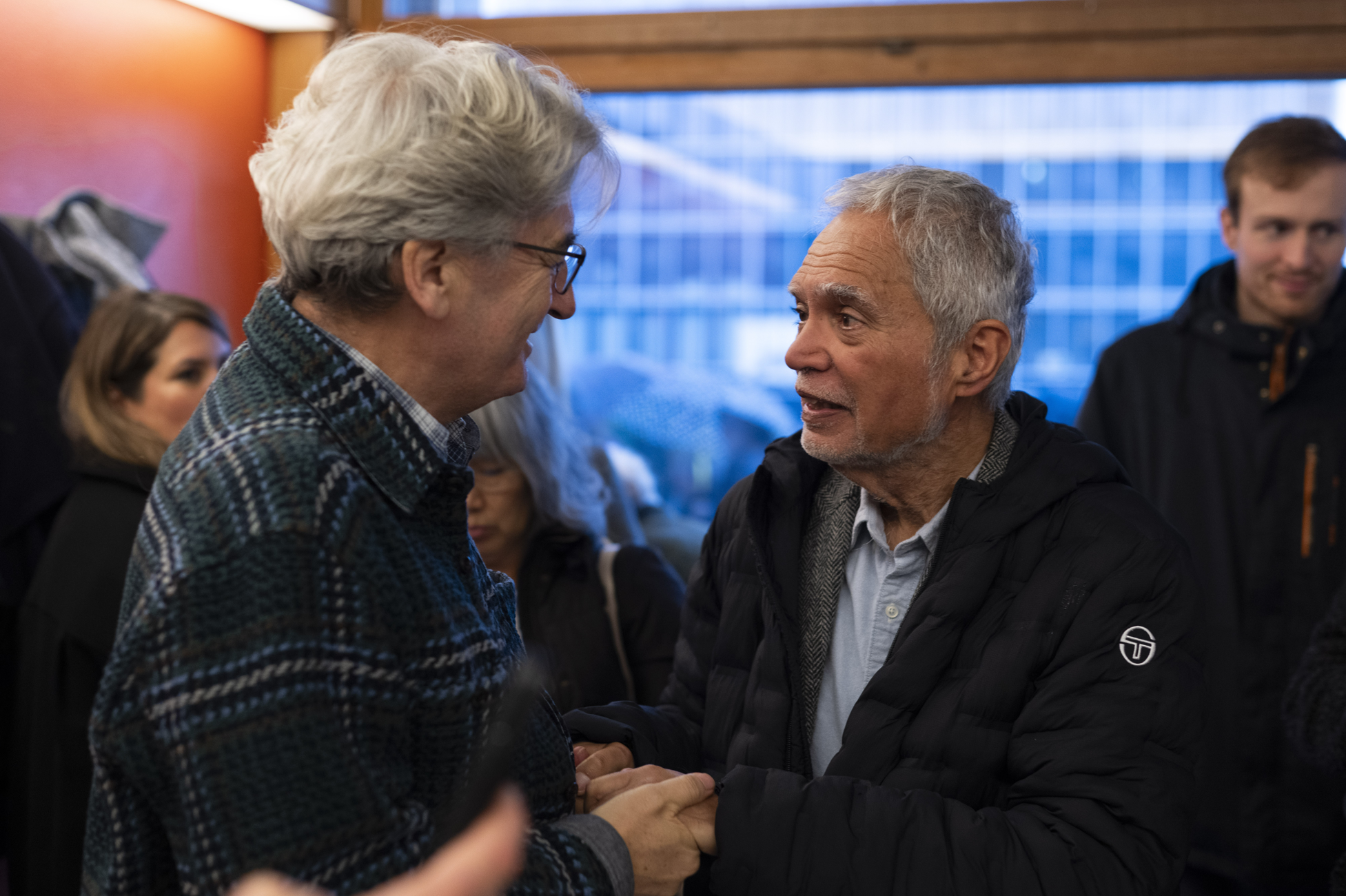
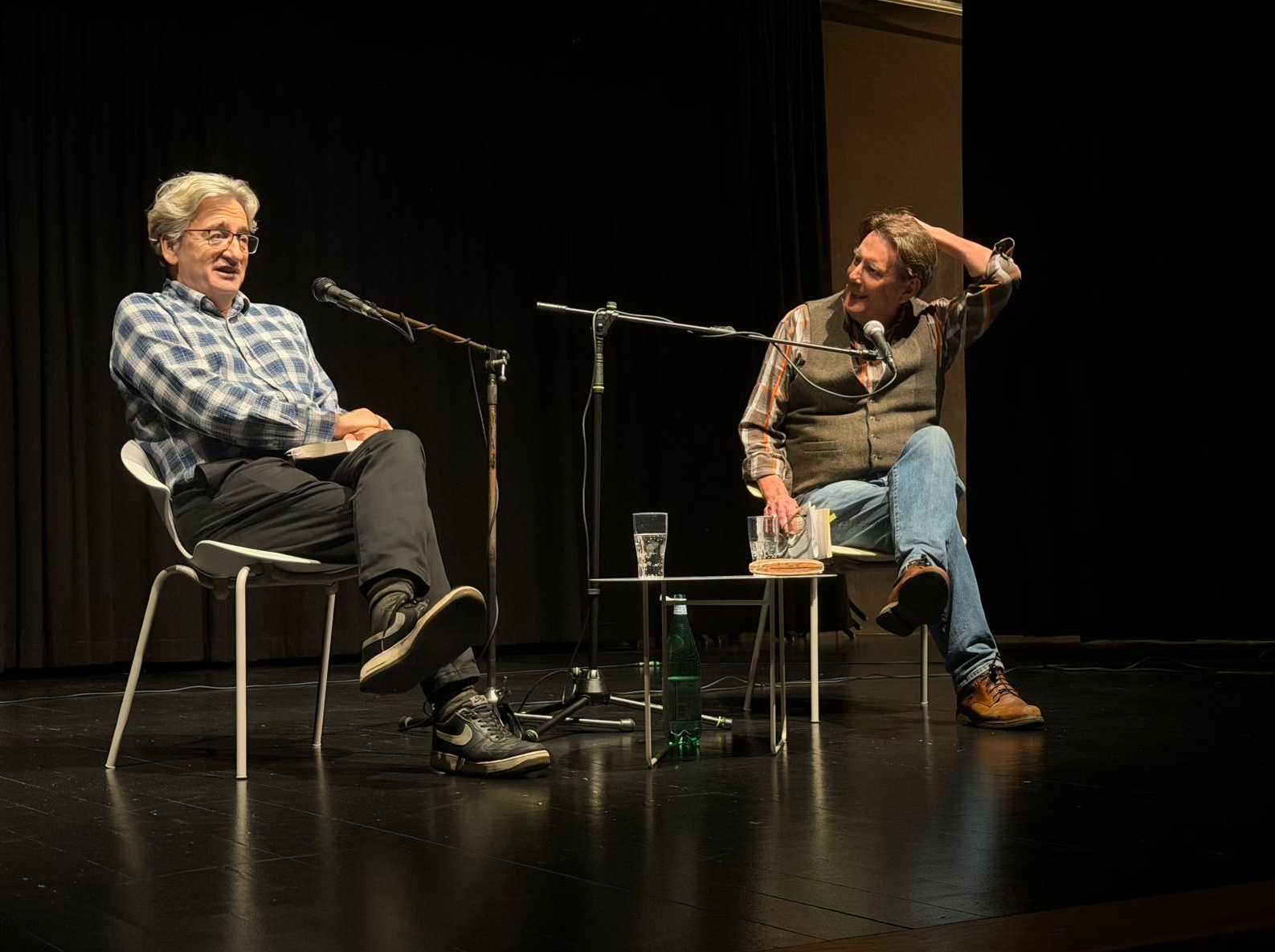
In 21 years, this was the first time GLAS organized an event on a Sunday afternoon, and we were pleasantly surprised at how popular it was. We had a sold-out crowd for ‘A Conversation with Fergal Keane’ and raised CHF 4,500 (EUR 5,000 approx.) for the Gaza School of Music. Fergal was with us to talk about his brutally honest Memoir ‘The Madness: War, Fear and PTSD.’ He did it with good grace, humour and great empathy for anyone in the audience who might be struggling with an addiction of one kind or another or have an addict in the family.
Given his front-line reporting for the BBC as a war correspondent, notably his experiences of the Rwandan genocide, it is hardly surprising that he suffers from PTSD but he reflected deeply on how its origins lay in his own childhood, growing up in a home where life was uncertain and often tense due to his father’s struggles with alcohol.
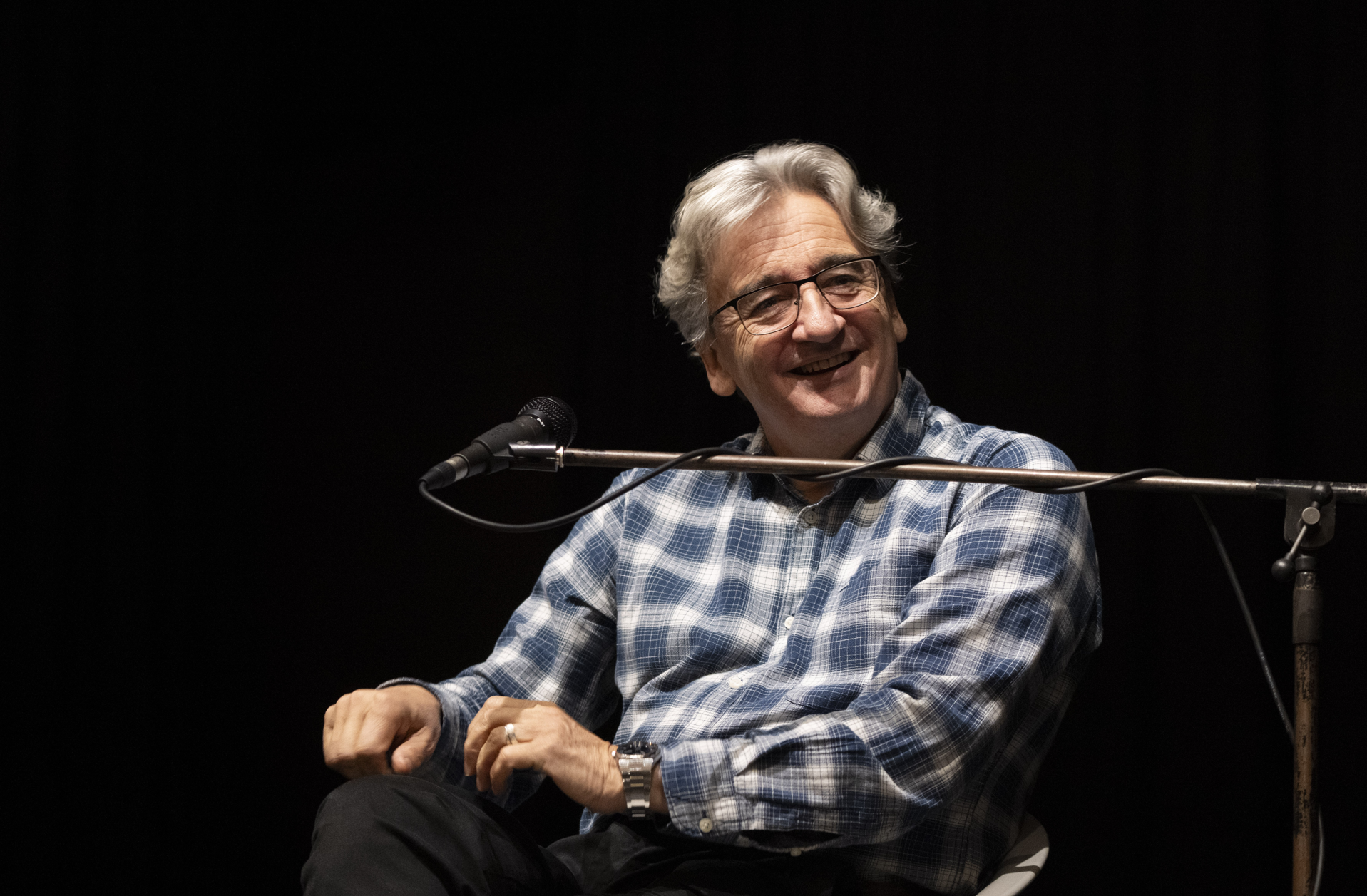
Fergal has not had a drink in 20 years. His own struggles with alcohol date back to his first newspaper job when he worked for a provincial newspaper in Ireland, the Limerick Leader, as an 18-year-old straight out of school. Drink became a crutch for him as he took on difficult assignments in war zones around the world. He eventually gave it up but he crashed and burned a few times from PTSD before calling a halt to his other addiction, rushing off to war zones, where he often saw colleague killed or injured. He is now retired from the BBC after 37 years. He finished with a flourish by providing commentary for Queen Elizabeth’s funeral. Fergal keeps busy, working with his wife, the Oscar-winning filmmaker Alice Doyard, on various film projects and his first novel is due out in 2027.
Love and the kindness of family and friends are the most important things in his life. He has become disenchanted with the world of TV news and rarely watches it. In much of his writing now he seeks to draw attention to the terrible death toll among journalists around the world, particularly in Gaza and Lebanon where they are often marked for death by the Israeli Defence Forces.
A message from Gaza
The following is from a message sent to GLAS before the show by Sima Khoury, the Executive Director of the Edward Said National Conservatory of Music which includes the Gaza School of Music.
“Since October 2023, Israel’s ongoing genocidal war on Gaza has systematically targeted the foundations of Palestinian life. Our Gaza Music School building was completely destroyed, and our teachers and students have been forcibly displaced, starved, and stripped of their homes and instruments.
“Amidst this devastation, one might ask: Why music? Because in Gaza, music is not a luxury; it is a vital space of protection, human dignity, and unyielding resistance against erasure.
“Where infrastructure was destroyed, human connection took over. Our resilient teachers continue to reach children in refugee tents, makeshift classrooms, and ruined courtyards across Gaza. When instruments were lost, our teams crafted percussive instruments from materials salvaged directly from the rubble.
“We are not passively waiting to rebuild; we are actively establishing resilient micro-community hubs inside Gaza’s neighbourhoods, ensuring local musicians lead Gaza’s cultural renewal from within. Gaza is not merely a site of victimhood; it is a living center of artistic creation and cultural continuity.”
We thank Fergal for his time and for participating in an excellent Q&A with the audience. And most of all, we thank all who came and contributed so generously to a worthwhile cause.